Meta smart glasses face privacy scrutiny over camera LED
9to5Google says a clearer camera light could help Meta smart glasses address privacy concerns linked to misuse of the recording feature.

Key takeaways
- Meta smart glasses have faced privacy criticism over the camera indicator light.
- Some users disabled the light, leading Meta to issue software patches.
- Rival glasses use a camera light that is visually distinct from the camera.
- 9to5Google says a clearer light design could help Meta's image.
In this article
Meta's privacy problem
Meta smart glasses face renewed privacy scrutiny, according to 9to5Google in a report published on 18 November 2026. The article asks whether a change to the camera indicator light could reduce concerns linked to misuse of the recording feature.
The issue is not new. 9to5Google says Meta has faced criticism for two years because some people have misused the glasses. The camera is supposed to show a small indicator light, known as an LED, when it is recording, but that light has been disabled in some cases.
The report says this has created a lasting image problem. Some social media users have used a crude nickname for the glasses, and many people now feel uneasy about camera glasses after seeing the abuse. The report says the nickname reflects how some people have misused the technology. Meta has responded with several software patches, but the concern has not gone away.
Why the camera light matters
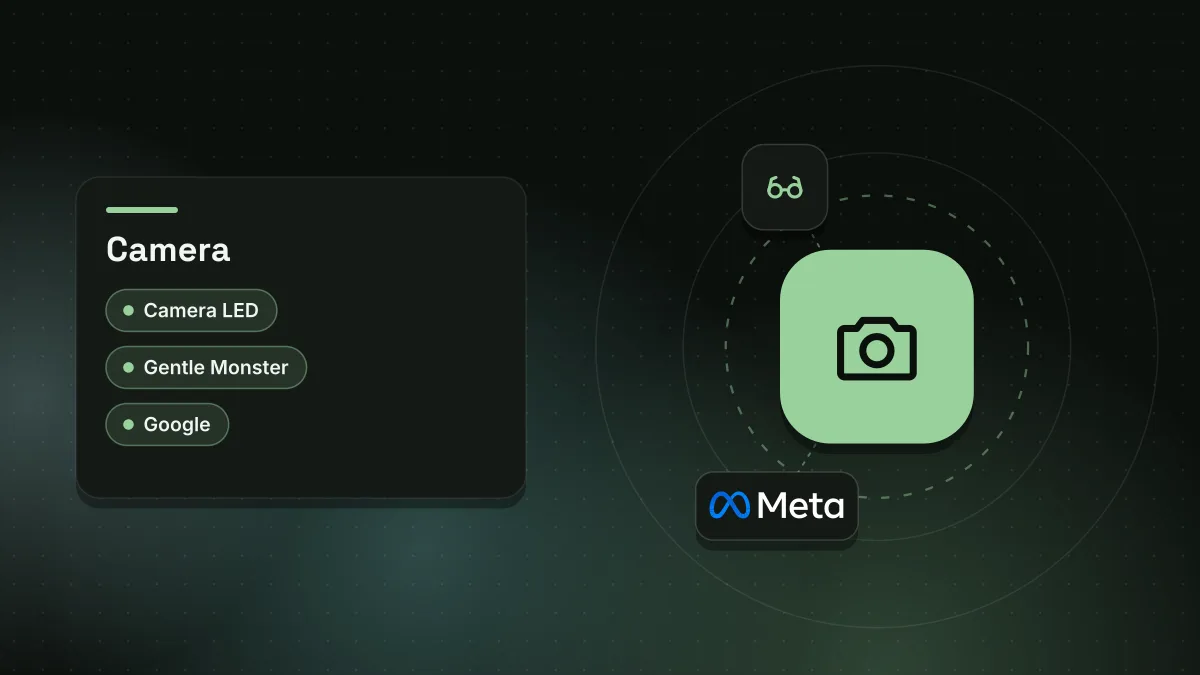
The design of the light is central to the debate. On Meta glasses, the indicator is symmetrical with the camera, so it can be hard for other people to notice. 9to5Google says this stealthy look may make bystanders uneasy.
The report points to glasses involving Samsung, Google, Warby Parker and Gentle Monster as a contrast. These glasses also resemble Meta's designs, but their recording light is visually distinct from the camera. That difference makes the recording status easier to spot, according to the article.
This matters because a visible light can act as a signal to people nearby. If the light is obvious, others may be more likely to ask about the glasses or notice that recording is taking place. Meta's symmetrical design, by comparison, keeps the camera and light looking similar. The report says this difference could make the Samsung and Google glasses feel more private.
Meta's product line and a deleted post
Meta has expanded its own smart glasses range this summer. 9to5Google says the company launched glasses without Ray-Ban or Oakley branding, including cheaper models and styles carrying Kylie Jenner or LISA names. The report says these products have done well, but none of them changed the camera light design.
The competitive context is also important. 9to5Google describes the smart glasses market as heating up, with Meta and Samsung preparing to compete more directly. That makes any privacy concern more significant, because rivals may use camera design as a way to stand out. 9to5Google also covered the topic on episode 125 of its Pixelated podcast.
On 17 November 2026, Meta glasses product lead David Woodland posted an image of a Gentle Monster cateye style on X. The post was later deleted. 9to5Google says it likely pointed to similarities with Meta's Starfire Kylie Jenner style, though the exact reason is not confirmed.
What a redesign could change
A more obvious camera light could make it easier for people nearby to see when the glasses are recording. 9to5Google says such a change would likely help Meta's image. No redesign is confirmed in the report.
The wider issue is trust. Meta has already issued software patches to stop the camera if someone tampers with the light. Still, the article suggests that software fixes alone may not remove the stigma attached to camera glasses, especially as rivals prepare their own products.
For readers, the key point is that privacy concerns are now part of the smart glasses competition. A hardware change to the indicator light may not solve every concern, but it could make the devices easier to trust in public. The report leaves open whether Meta will make that change. It says the question is whether a visual change can repair an association that has already formed.
Sources
Spotted a mistake? See our corrections policy. Read how News by OnDevice works in our editorial policy.
Related news
More Gadgets news
Casio G-Shock Gloves move from April Fools' joke to real product
Casio has turned its G-Shock Gloves from an April Fools' prank into an actual accessory. The gloves are free with qualifying purchases of £150 or more from G-Shock UK.
Garmin Fenix 8 falls below £500 in early Black Friday deals
Amazon has cut the Garmin Fenix 8 to its lowest price yet, with the 43mm model at £499.99 and the 47mm at £484.99. TechRadar says the discount makes the older adventure watch a strong choice over some rivals.

Leaked Ohio eminent domain bill could aid data centres
A leaked Ohio eminent domain bill could let data centre projects qualify as public utilities, opening the door to land seizures under eminent domain rules.

Works with Home Assistant adds Aeotec and nine certified devices
Aeotec has joined the Works with Home Assistant programme with nine certified devices. The lineup includes Z-Wave Long Range sensors, switches and a smoke detector.