Dpvr P1 Max Eye VR headset adds 220Hz eye tracking
The $999 device targets research, training and usability testing, with per-eye cameras and developer access to gaze data.

Key takeaways
- Dpvr announced the P1 Max Eye VR headset with binocular eye tracking.
- The headset uses two 400 × 400-pixel cameras and claims 0.5 to one degree accuracy.
- It is aimed at research, training and usability testing, not everyday gaming.
- Dpvr quotes $999, including the eye-tracking licence.
In this article
What Dpvr announced
Dpvr has introduced the P1 Max Eye VR headset, according to Notebookcheck. The standalone device is aimed at researchers, developers, training and business users, rather than everyday gamers.
It adds binocular eye tracking. A pair of cameras watches each eye separately. Each camera has a 400 × 400-pixel resolution. Dpvr says the present firmware supplies gaze information at 120 to 220 Hz.
The company positions the headset for research, training and business applications. Notebookcheck notes that the device is not intended for ordinary gaming use. The report presents the P1 Max Eye as a professional device.
Eye tracking performance
Dpvr claims tracking accuracy between 0.5 and one degree. It also claims algorithm latency under five milliseconds. These figures describe how closely the system follows gaze and how quickly it reports movement. The figures are company claims.
A nine-point calibration process is supported. Calibration helps align the tracking with the user's eyes. The system can provide separate signals for each eye and a merged gaze position.
The merged position gives a single point where the user is looking. Separate eye signals can support more detailed analysis. This allows studies that need per-eye information. The 220 Hz figure is the top of the stated range, while lower rates are also possible.
Developer tools and uses
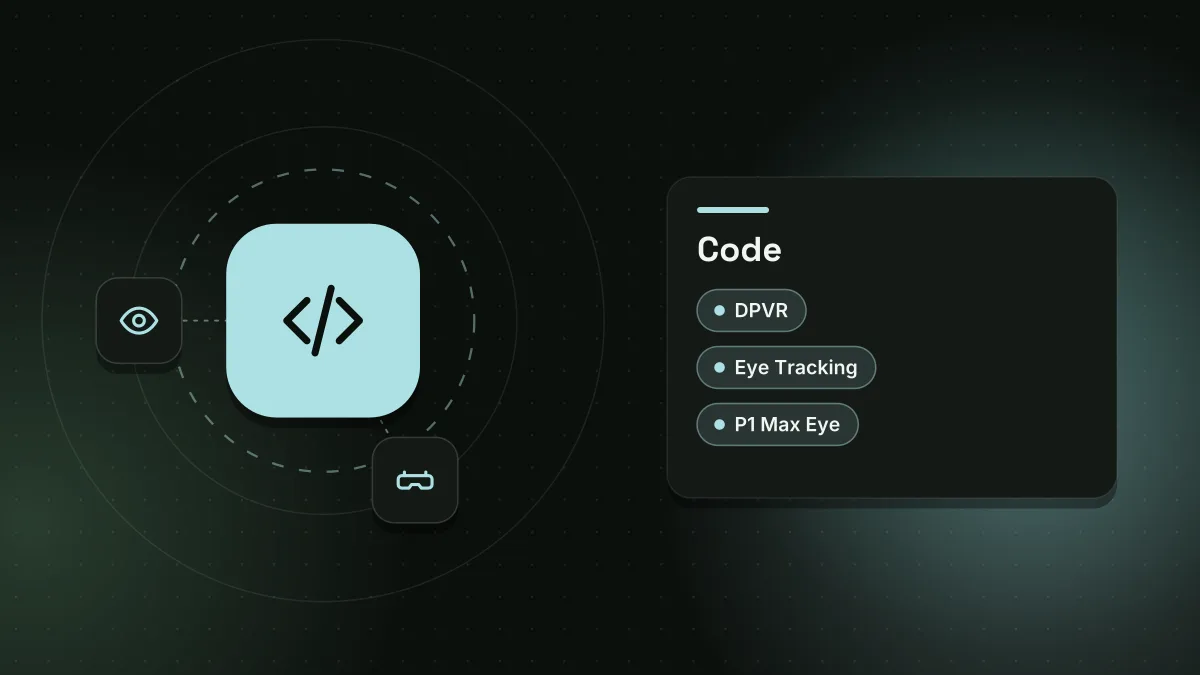
Raw data access is available through Unity and Unreal software development kits. These kits let developers connect the headset to research, training or usability software. Access to raw data is a developer feature because it goes beyond a simple gaze point.
Dpvr says the headset fits research into visual function, VR training and usability checks. Developers could study where people look while completing a simulated task.
The same data could support training reviews or usability studies. Notebookcheck gives the example of examining attention during a simulated task. This shows the intended workflow for developers. The headset is therefore aimed at teams that need gaze data, not at casual gaming.
Hardware and background
The headset uses a Snapdragon XR2 processor, eight GB of RAM and 128 GB of storage. Its combined display resolution is 3,664 × 1,920. The core hardware is familiar from the earlier P1 Max. The resolution is described as combined, rather than as a per-eye figure.
The standard P1 Max appeared in August 2025 from Dpvr. A version with eye tracking appeared in a September 2026 preview. The preview included a module planned for 120 Hz.
The announced headset can supply gaze information at up to 220 Hz. That is higher than the planned 120 Hz module. Dpvr has also released video featuring the earlier P1 Max. That video presents the base device on which the eye-tracking model builds. The core platform appears unchanged from the earlier P1 Max.
Price and availability
Dpvr quotes a price of $999, including the eye-tracking licence. An earlier report mentioned $799 for an eye-tracking version. The September preview suggested about $1,000.
Notebookcheck says the final price reflects added upgrades. The $999 figure is close to the September estimate and higher than the August report. The earlier figures show that pricing changed during development.
The headset has been formally announced internationally. Delivery dates and access to evaluation units depend on separate arrangements with Dpvr. Potential buyers may need to contact the company for delivery and evaluation terms. The report does not give a general release date.
Sources
Spotted a mistake? See our corrections policy. Read how News by OnDevice works in our editorial policy.
Related news
More Gadgets news
Casio MTP-B225 slim metal watch leaks ahead of January 2027 launch
Casio's new MTP-B225 analog watch has appeared in six colour variants at a Vietnamese retailer, with a release expected in January 2027.

Garmin Fenix 9 sale cuts $100 off every model
Garmin has discounted its new Fenix 9 series by $100 across the range, an early sale that DC Rainmaker says is unusual for a just-launched flagship watch.

Wearing a Fitbit on your ankle: what works and what suffers
Engadget looks at the growing habit of strapping a Fitbit to the ankle, which can catch steps a wrist tracker misses but may compromise heart-rate and sleep data.
Home security camera features guide: resolution, night vision and cellular backup
The Engadget guide published on 23 November 2026 details the key specifications to consider when selecting a home security camera system. It also covers power options and smart features that affect reliability.